Too windy for sailing

Resized_20191002_160201-1008x437.jpg

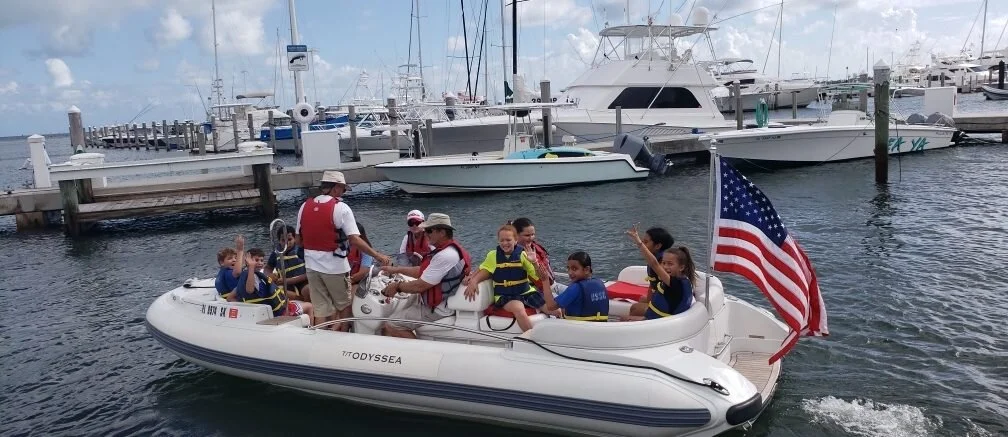
Sometimes the risk outweighs the reward. When it’s too windy for sailing, when do we cancel? What is our plan B? Thanks to the latest boat donation to Team Paradise, our community sailing program now has another option on what to do!

The 21’ Jet Tender is what every community sailing program should have. It’s made by Castoldi, an Italian boat builder specializing in mega yacht tender boats powered by inboard diesel jet engines and papered by the Castoldi water jet drive. It’s a boat like no other.

It had been a very windy week with gusts up to 30 knots for days in a row. By the time the kids from Shenandoah Park arrived the US Sailing Center it had dropped a bit. But why take the risk of potentially scaring these kids when time is very limited (about 1.5 hours) and they are not prepared for a windy sailing experience? Nothing good will likely come out of that!

Instead, all twelve of us boarded the Castoldi for a shore line excursion, visiting land marks such as Viscaya and the Marine Stadium. It’s amazing how much distance that can be covered in a power boat compared to a sail boat. On our way back, we stopped at the Viscaya Sand Bar, where we anchored and most of everyone got in the water.

These kids where back in the bus promptly at 5.30PM. They had a BLAST!

Unplug from electronics and tune in to nature! Team Paradise Sailing offers youth from Miami-Dade County access to the sport of sailing on Biscayne Bay.  Read more about our community sailing.

After school sailing with City of Miami Parks & Rec

Screen-Shot-2019-09-27-at-3.44.45-PM-1200x437.png

The days are getting shorter and the record high temperatures are giving in to more pleasant conditions. Summer is turning into Fall and before we know it, the Holiday season will be upon us.

Another sign of Fall is when kids from City of Miami Parks & Rec’s after school program come and sail with us on Wednesdays. The program spans ten weeks and the kids come from ten different parks located within the City of Miami. It’s the sixth year that Team Paradise has the honor of serving this very precious population.

Wednesday was particularly fun because the weather was super nice and the kids were exceptional. The experience that we have gained through our Summer Camp with the Bay-Play curriculum makes us very confident taking kids out sailing.

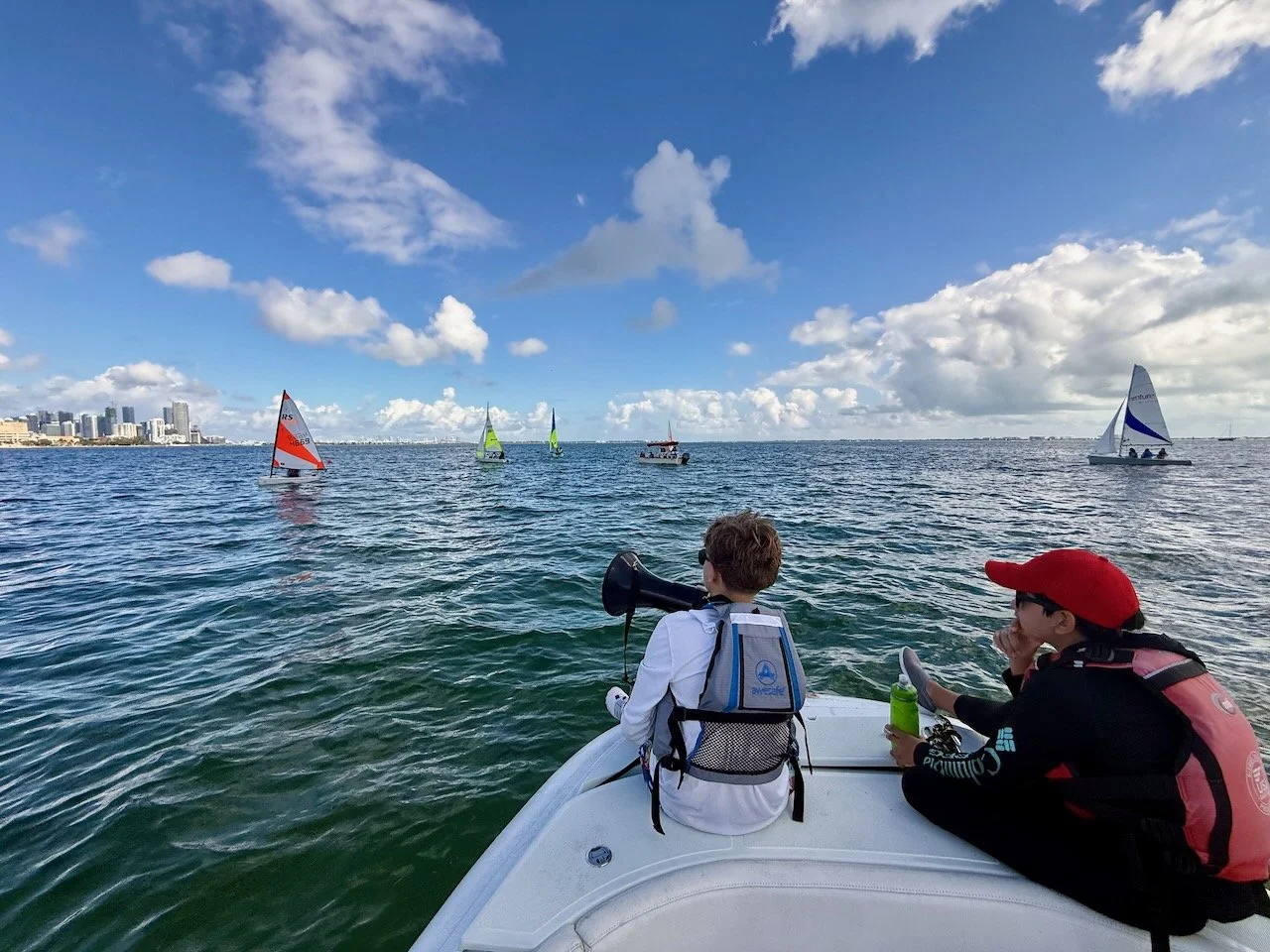
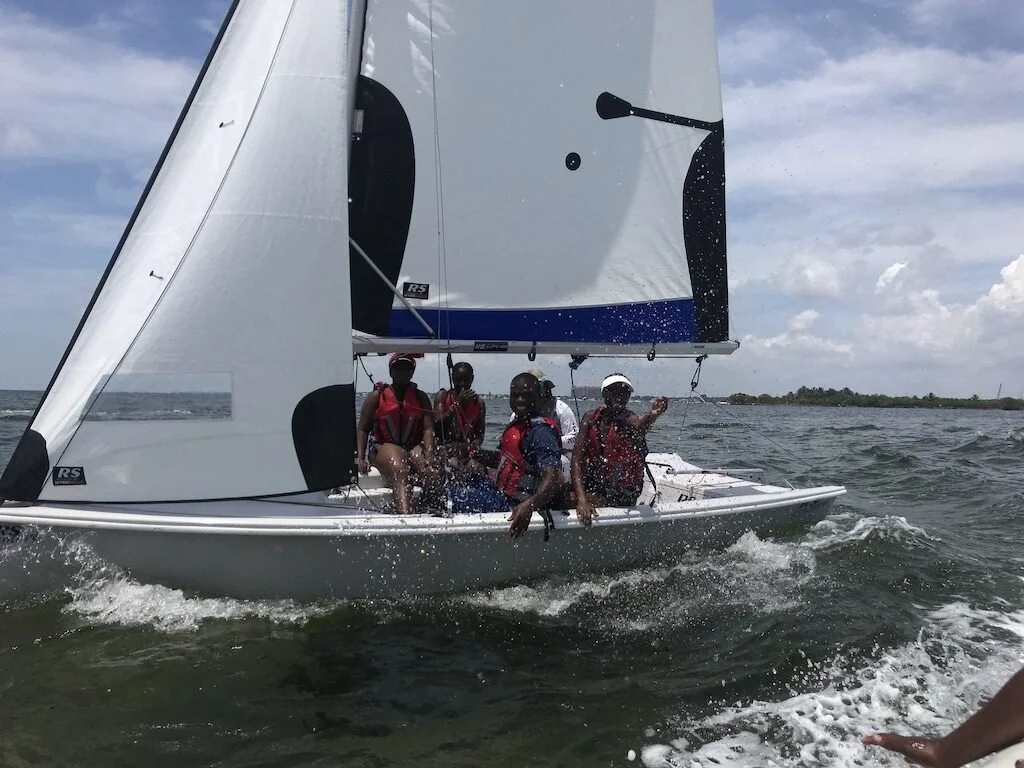
On this particular day, I asked the kids as usual: how many of you can swim if you can’t touch bottom? All seven kids said that they were swimmers. Five kids teamed up with me in the RS Venture while the remaining two kids went Sonar sailing with our ace volunteer skipper, Charles Nethersole and two counselors from the Park.

We sailed across the Bay to the west point of Key Biscayne, my favorite spot in Biscayne Bay. I’m not sure who had more fun, the kids or me. The journey was documented along the way and the video that was made gives you an idea of the fun we had. The sail back to port was fantastic. A prefect reach with gennaker and plenty of apparent wind made us all smile.

Out of the seven kids, all of them would like to come back and sail with us again. How can we make it possible? Please know that we receive no income from this program. There is no fee charged for providing this transformative and awesome experience. It’s only made possible through your generosity.

Unplug from electronics and tune in to nature! Team Paradise Sailing offers youth from Miami-Dade County access to the sport of sailing on Biscayne Bay.  Read more about our community sailing. 

Bart’s Bash 2019

AW9I6131-1200x437.jpg

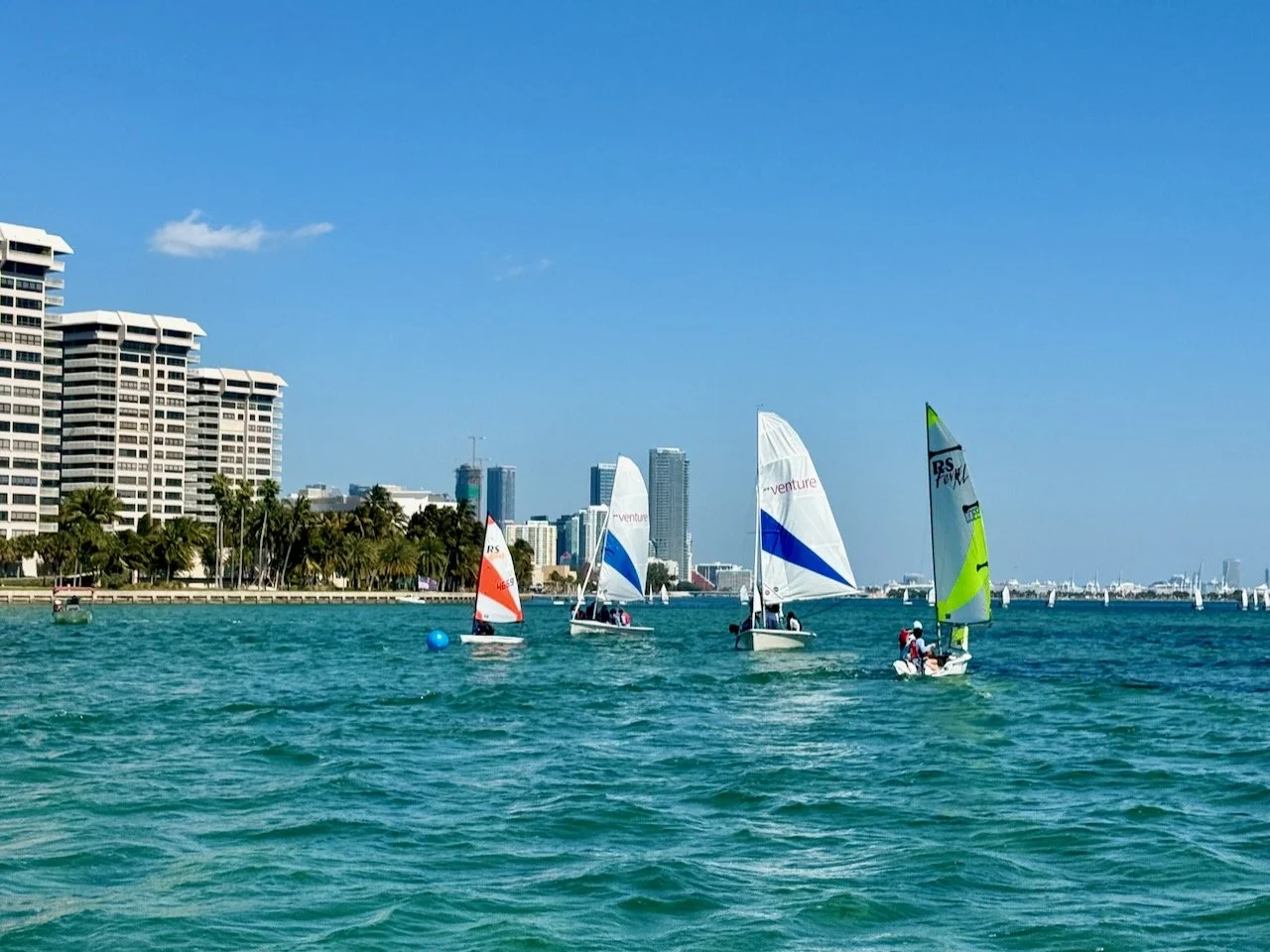
Team Paradise hosted Bart’s Bash on September 15th. Bart’s Bash, the largest sailing race in the World! Youth programs from neighboring yacht clubs and private schools were invited. Team Paradise entered two teams for the event, both with kids form the FOCAL program in Moore Park. These were some of the kids from our summer camp who came back for more fun on the water.

I tapped our board of directors to run the race. We had great help from other volunteers as well. We settled for one start with all boat classes on the line at the same time (Optis, 420, Laser, 29er and RS Venture). There were 55 boats and 72 participants in total. The black flag was in effect right away. The course was a triangle with the leeward mark below the starting line and the finish on the starboard side if the Race Committee boat. The course was 1.06 Nautical Miles. Judging from smiles, cheers and laughter, it seemed like everyone had a great time as the weather cooperated nicely. Next years event takes place on September 13th and we sure look forward to that.

Bart’s Bash is a global sailing race taking place at 100’s of venues, with 1000’s of sailors in 100’s of different classes of boat around the world. Founded in 2014, the event was verified by Guinness World Records as ‘The Largest Sailing Race in the World’.  How about that?

Unplug from electronics and tune in to nature! Team Paradise Sailing offers youth from Miami-Dade County access to the sport of sailing on Biscayne Bay.  Read more about our community sailing. 

Sailing practice with FOCAL kids

IMG_0673-1200x437.jpg

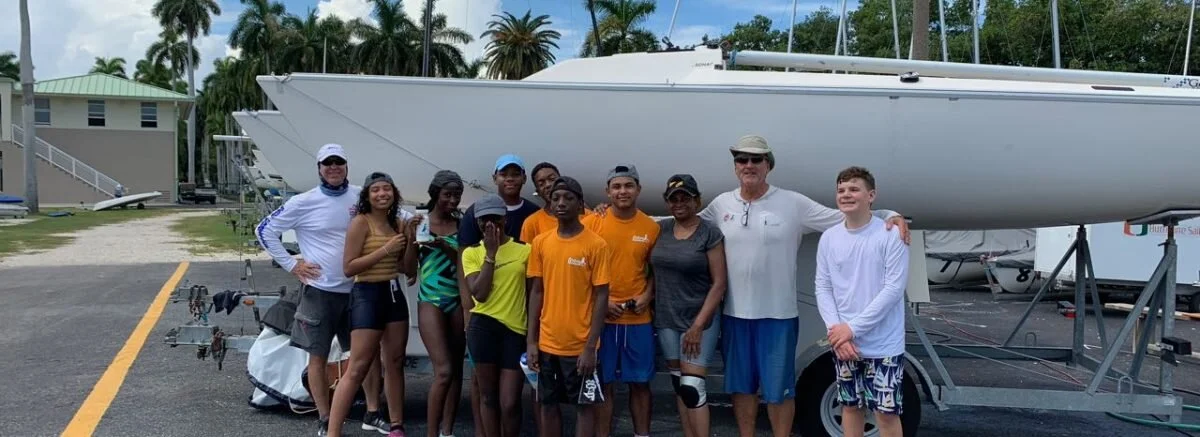
We had scheduled for two training sessions before the Bart’s Bash, but had to settle for one Practice day only.(September 8th). It was certainly great to see the familiar faces from Summer Camp again. Three girls and four boys sited along with the FOCAL Program founder, Mrs. Barbara Hardemon.

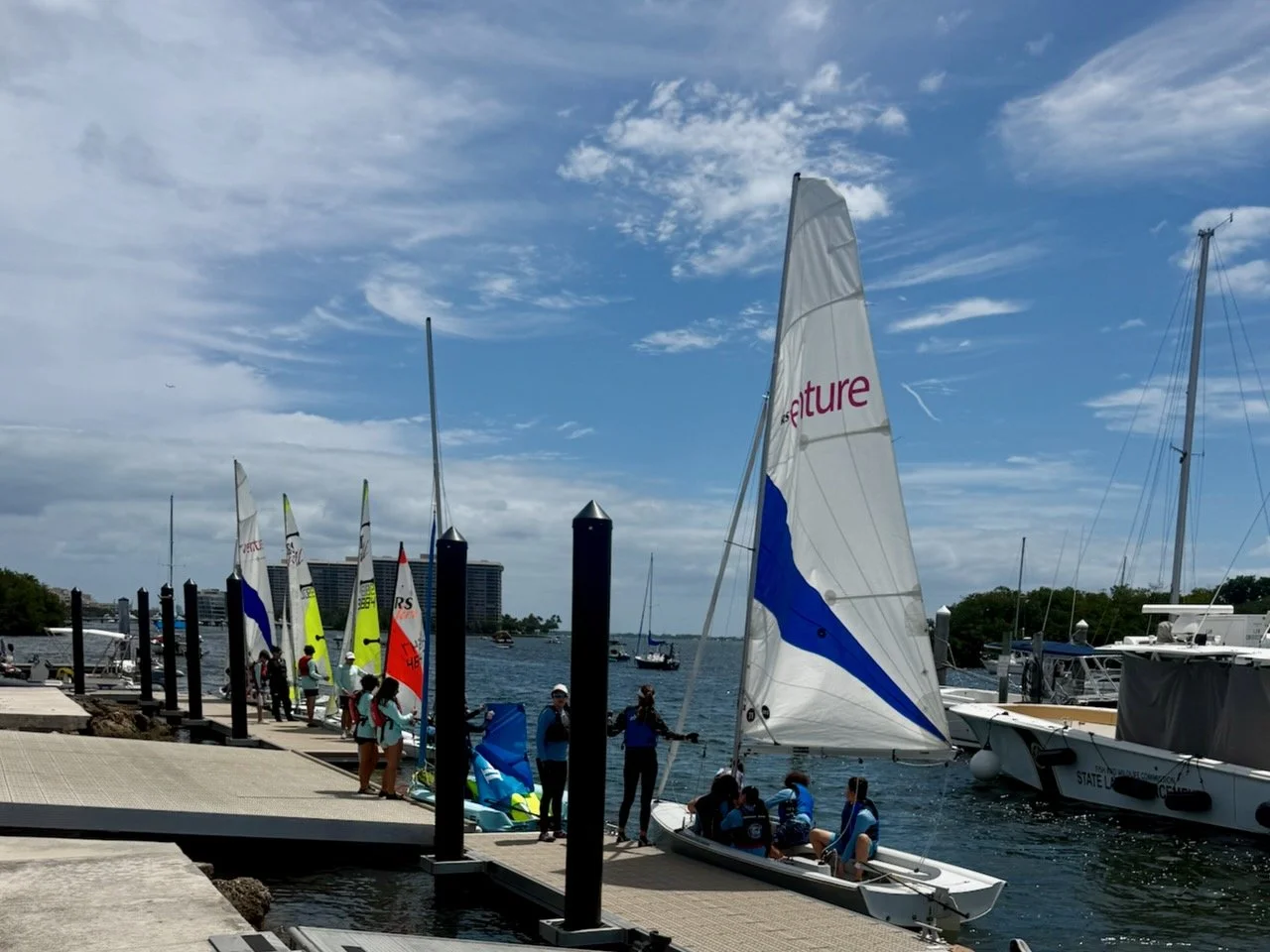
We had planned on using two RS Venture boats, but as it turned out, our practice switched from Saturday to Sunday and we lost some valuable volunteers to help us. Instead, we took our Castoldi Jet-tender and one RS Venture only. Half of the crew boarded the Castoldi and we met up at the Viscaya sandbar. We switched the crew and everyone got some practice. Mission accomplished!

2019 Inclusive Summer Camp

VSFbxnRMQOq4ENPBjgxEg_thumb_a2a6-1024x576.jpg

This year we invited campers who are able to swim, or at the very least would pass a float test. Being on the water is sure a lot more fun for those that swim. We used our Inclusive Summer Camp as a motivator to encourage the kids to learn how to swim. Our “Bay-Play” curriculum uses Biscayne Bay as a unique classroom while exploring several fun destinations around the Bay. Our Inclusive Summer Camp was funded by donations and was 100% free for the campers. We served 212 kids in total and everyone had a fantastic time.

The FOCAL Program

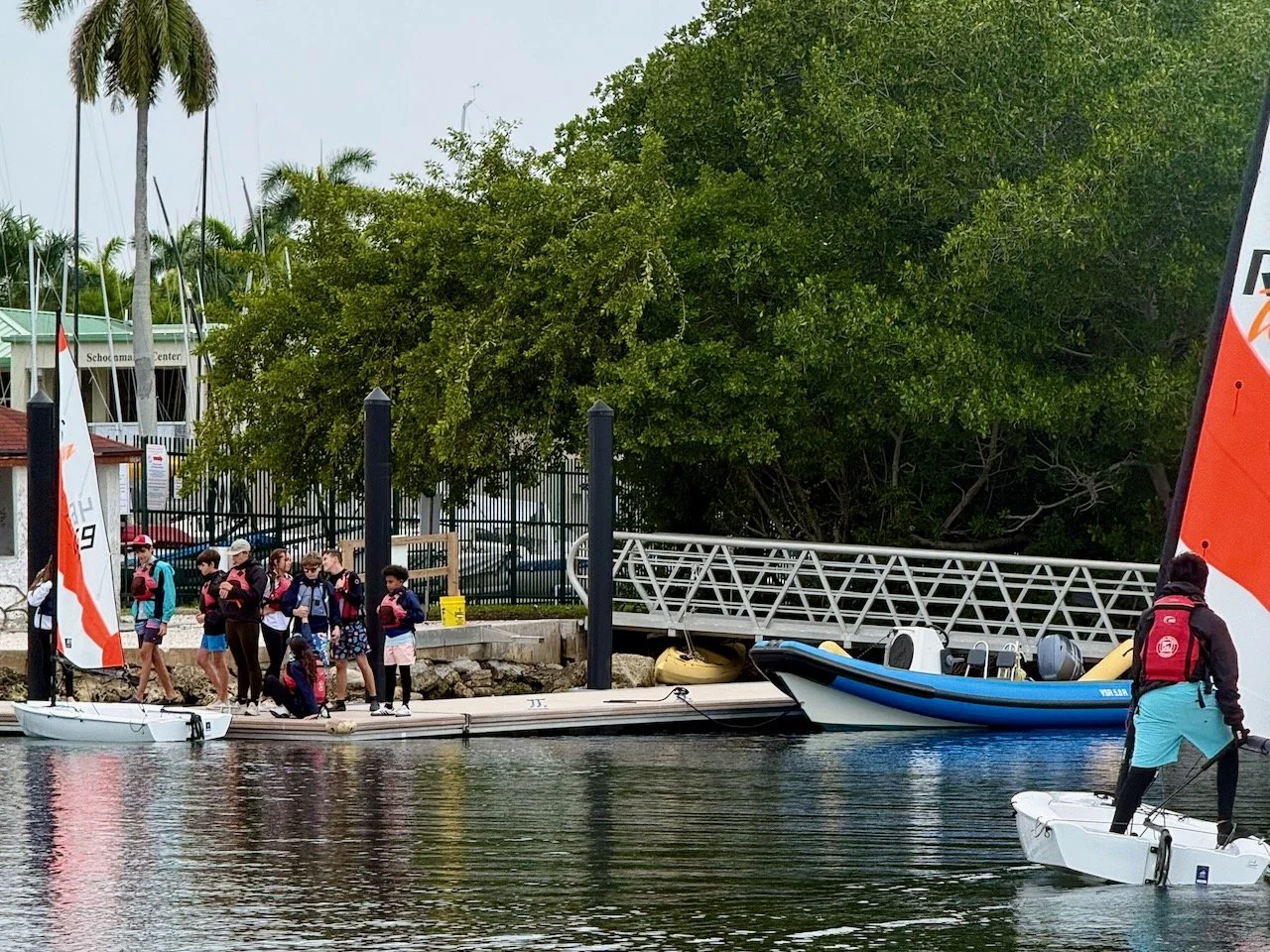
Team Paradise Sailing welcomed 20 kids each day from the City of Miami’s Moore Park FOCAL Program to sail with us during the period July 1st through the 19th. FOCAL’s Barbara Hardemon commented that the parents were calling her, praising our program and how much fun the kids had on the water! 

Breakthrough Miami

It was a memorable day when forty (40) 5-graders from Miami Breakthrough came to sailed with us! We divided the group in two and while one group went sailing, the other group had class room activities such as S.T.E.M. education in the class room. The lab for the day was air pressure and how it also correlates to sailing. Kids also learned how to tie some of the most common knots.

By the time the first group returned to shore, the second group were finished in the class room and were ready to go sailing. We switched and repeated our tasks. Fun, fun, fun!

Down Syndrome Association of Miami

Other summer campers visiting during July were a couple of groups with special needs kids along with their parents from. The Miami Down Syndrome Association was one of the groups visiting. The other group were friends with special needs kids that really enjoyed a day on the water. Let’s go sailing again, soon!

About our Community Sailing

Unplug from electronics and tune in to nature! Team Paradise Sailing offers youth from Miami-Dade County access to the sport of sailing on Biscayne Bay.  Read more about our community sailing.

Crewing in a Star

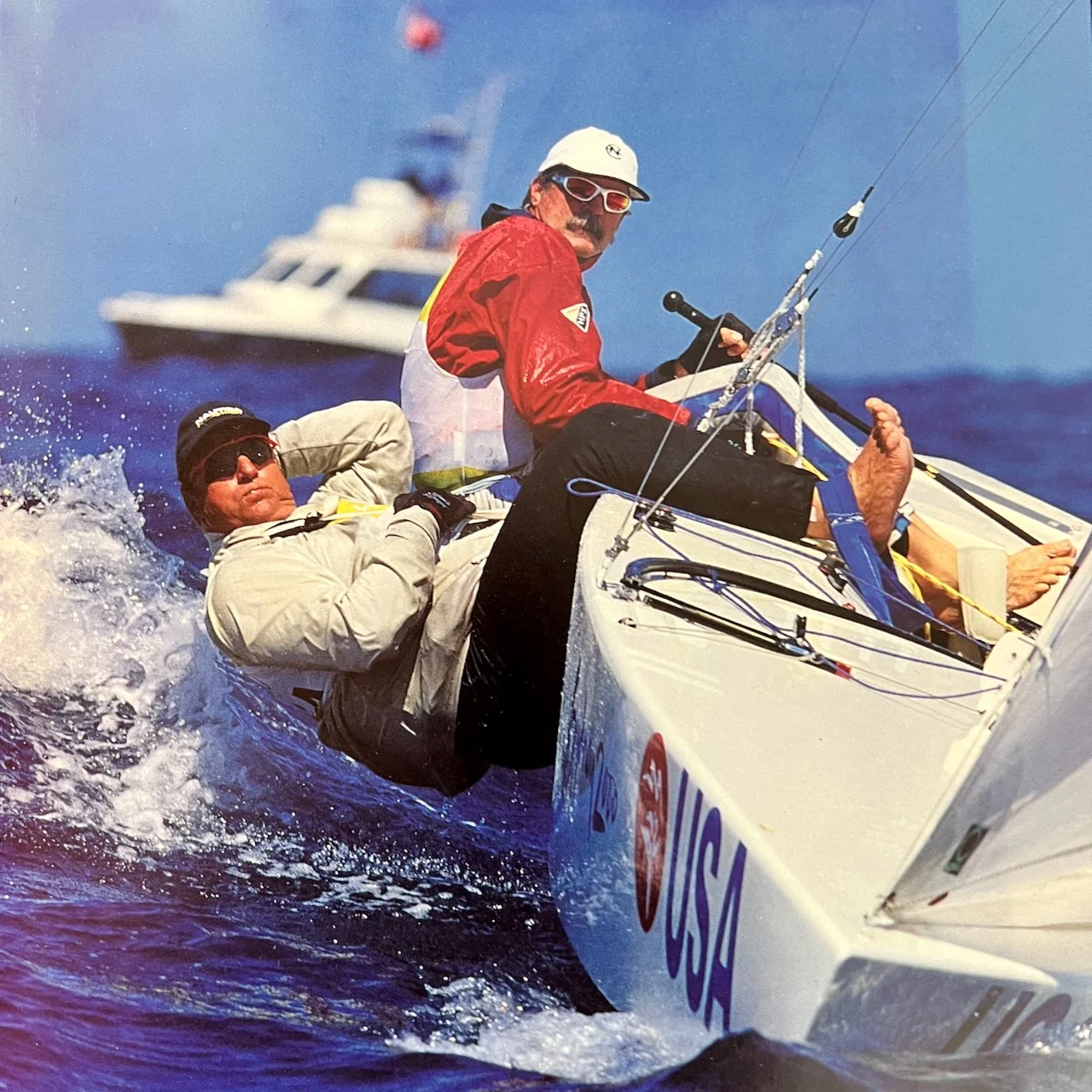
“Crewing in a Star” was written by your truly circa 2002 and updated 2012 (v2). The below guide is a summary, generated by Gemini. The full version (v2) might be available from the International Star Class.

Crewing in a Star: A Guide to Sailboat Racing

The article "Crewing in a Star: A Guide to Sailboat Racing" by Magnus Liljedahl offers in-depth guidance and insights to enhance skills and maximize performance in sailboat racing, specifically for the crew of a Star boat. Liljedahl underscores that while winning is gratifying, the ultimate rewards in the sport are the friendships and respect gained from people around the world. He emphasizes that sailing is "only a game" and that there is "always another race," encouraging persistence and resilience.

The guide primarily focuses on two critical pillars for successful racing: preparation and teamwork.

I. Preparation

Preparation for a racing season begins with establishing a vision, a dream, and specific goals. Key elements include:

Team Foundation: Building a strong team necessitates mutual trust, meticulous attention to detail, and a focus on results. The author acknowledges that conflicts are an expected part of the process.

Crew Weight Optimization: Top teams strive for maximum combined crew weight3. The ideal crew weight is typically slightly more than the skipper’s, as this combination is advantageous for tacking, as the crew is usually first over the rail, and for overall boat handling. Historically, skippers would expect the crew to gain all the weight, but this has evolved.

Physical Conditioning:

◦ Physical training is a fundamental requirement for any athlete, and a Star crew is no exception.

◦ The most crucial training is sailing the boat for countless hours, engaging in extensive hiking, and tacking.

◦ Attention to health and diet is essential, requiring the replacement of expended calories with nutrient-rich foods.

◦ The sport is predominantly aerobic, but it also demands anaerobic strength.

◦ Core muscles are identified as vital for sailing and should be consistently included in workouts.

◦ Polymetric exercises are beneficial once adequate strength and flexibility are developed6.

◦ The off-season is the ideal period for intense gym workouts, with the rest of the season shifting to a maintenance phase.

◦ Cross-training activities such as power walking, biking, rowing, and kayaking are recommended.

◦ Daily routines should include stretching and maintaining a good diet.

Boat and Gear Readiness:

◦ Before a race, total focus and high concentration are paramount.

◦ One team member should possess an "anal personality" with meticulous attention to detail to ensure all critical checks are performed. If the skipper doesn't have this trait, the crew must.

◦ Developing a task list is recommended for verifying essential items, such as empty water tanks, proper backstay markings, and having drinking fluids on board.

◦ Hiking straps should be inspected and customized, with Teflon polish suggested for easier movement.

◦ A digital compass is a must-have and should be mastered.

◦ Following a predetermined routine for rigging the boat, hoisting sails, and pre-start "homework" saves significant time and effort.

• Pre-Race Routine:

◦ Effective time management is a major contributor to success, with many winners crediting early departure from the dock.

◦ "Homework" on the racecourse is crucial, involving sailing it multiple times to identify "highs" and "lows" and finding shore sight lines.

◦ Sail the starting line from the committee boat towards the pin, verifying sight lines and compass headings.

◦ At the 5-minute signal, the team should be at the committee boat heading for the pin, performing a final check of numbers, calibrating the compass, and adjusting the tacking angle (typically 65-72 degrees).

◦ The crew should locate the weather mark before the start, as this will be their job throughout the day.

◦ Continuously call out the distance to the line in boat lengths to keep the skipper informed.

◦ All lines should be cleaned up, and bailers closed if conditions permit (to reduce drag).

◦ Inform the skipper about the location of "hot teams" and help avoid other boats.

◦ On the final approach, the weather jib-sheet and leeward backstay should be pulled in to be prepared for an immediate tack. Jib sheets should be managed to avoid knots ("assholes") by straightening them in the water or using systems like the "Lillia system," and ropes should be kept forward under the deck to prevent tangling.

◦ The crew should assist the skipper by looking behind and up the line, informing about approaching boats and the committee boat's visibility.

II. Teamwork

Teamwork is fundamental, especially in a Star boat, which requires two people to operate effectively. Key aspects include:

Shared Responsibility & Communication:

◦ The crew's primary role is to help the skipper perform well, being ready for any last-minute adjustments.

◦ Constant communication is vital, with the crew feeding information to the skipper throughout the race, particularly after the start.

◦ The crew should inform the skipper about tacking opportunities, point/foot modes, avoiding collisions, and other boats' movements.

◦ Developing an eye for the trim and crew position of competitors, especially faster boats, is valuable for determining relative speed and height.. Information needs to be edited to avoid distracting the skipper, a skill that improves as the team develops.

Situational Awareness:

◦ The crew's job is to locate the weather mark, leeward gates, and offset mark throughout the day. Knowing the location of the leeward gates before rounding the weather mark is highly beneficial.

◦ Upon approaching the weather mark, the crew must find the offset mark, determine the leg's angle, and determine whether the team is lifted or headed, to help decide the favored gybe.

◦ On the offset leg and run, the crew should constantly look for and call out puffs, adjusting trim according to apparent wind.

◦ The crew should discuss the run strategy (pole-set or jibe-set) with the skipper.

Boat Handling Coordination:

◦ On the run, the crew is crucial in balancing the boat and preventing leeward heel by moving as far forward as possible and staying on the weather side.

◦ Crews should observe boats sailing upwind for signs of lifts or puffs, which may indicate when to gybe.

◦ The most important downwind task is to keep the boat's air clean from other boats, calling out the distance from disturbed air.

◦ Developing an eye for the competition's setup (crew position, main trim, vang tension, mast position, jib hoist, spreader angle) is valuable for adjusting one's equipment.

◦ As the boat approaches the leeward mark, the crew must be "lightning" quick with the takedown and transitioning the boat into upwind mode.

◦ The crew and skipper must decide which side of the gate is closer30.

◦ It is often helpful to discuss the next upwind leg strategy while still on the run30.

◦ A standard rounding routine involves the crew moving back to hiking straps, hand on the slug, followed by a coordinated sequence: slug down, outhaul on, jib down, mast aft, pole down, sheet trim, and balancing the boat. The skipper trimming the weather jib sheet for the crew is critical32.

Performance Optimization:

◦ On reaches, the crew should advise the skipper to head up in lows and bear off in puffs; bearing off in puffs or on waves provides recovery opportunities for the crew, as continuous straight-leg hiking is not sustainable.

◦ When rounding the leeward mark for the next lap, the top priority is to know if the boat is on a header or a lift, as staying in a lift, even in bad air, is often better than tacking into a header.

◦ The crew generally trims the jib, keeping the leech at the spreader band, and actively trims and eases it.

◦ The crew should hike from the forward cleat on a Folli, keeping weight as far forward as possible both downwind and upwind.

◦ Roll-tacks require precise timing between skipper and crew, involving an extra hike (push) at the last moment and jumping to the new weather side.

◦ Both gybing techniques (pole first or mainsail first) should be practiced. The pole-first method, often used in a serious roll-gybe, ensures the jib is complete once the mainsail gybes, helping keep the bow down and stay ready to ride.