Crewing in a Star: A Guide to Sailboat Racing
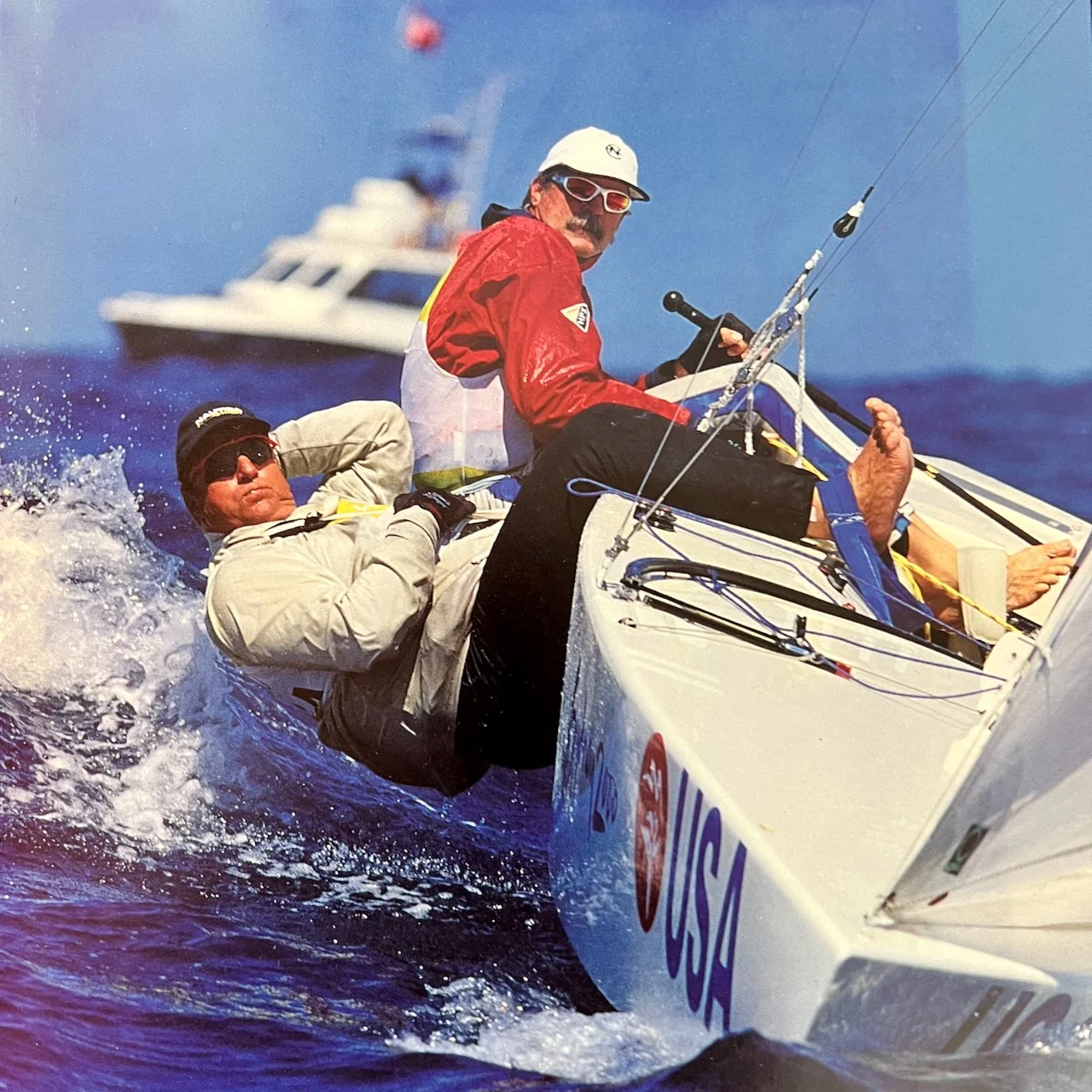
The article "Crewing in a Star: A Guide to Sailboat Racing" by Magnus Liljedahl offers in-depth guidance and insights to enhance skills and maximize performance in sailboat racing, specifically for the crew of a Star boat. Liljedahl underscores that while winning is gratifying, the ultimate rewards in the sport are the friendships and respect gained from people around the world. He emphasizes that sailing is "only a game" and that there is "always another race," encouraging persistence and resilience.
The guide primarily focuses on two critical pillars for successful racing: preparation and teamwork.
I. Preparation
Preparation for a racing season begins with establishing a vision, a dream, and specific goals. Key elements include:
• Team Foundation: Building a strong team necessitates mutual trust, meticulous attention to detail, and a focus on results. The author acknowledges that conflicts are an expected part of the process.
• Crew Weight Optimization: Top teams strive for maximum combined crew weight3. The ideal crew weight is typically slightly more than the skipper’s, as this combination is advantageous for tacking, as the crew is usually first over the rail, and for overall boat handling. Historically, skippers would expect the crew to gain all the weight, but this has evolved.
• Physical Conditioning:
◦ Physical training is a fundamental requirement for any athlete, and a Star crew is no exception.
◦ The most crucial training is sailing the boat for countless hours, engaging in extensive hiking, and tacking.
◦ Attention to health and diet is essential, requiring the replacement of expended calories with nutrient-rich foods.
◦ The sport is predominantly aerobic, but it also demands anaerobic strength.
◦ Core muscles are identified as vital for sailing and should be consistently included in workouts.
◦ Polymetric exercises are beneficial once adequate strength and flexibility are developed6.
◦ The off-season is the ideal period for intense gym workouts, with the rest of the season shifting to a maintenance phase.
◦ Cross-training activities such as power walking, biking, rowing, and kayaking are recommended.
◦ Daily routines should include stretching and maintaining a good diet.
• Boat and Gear Readiness:
◦ Before a race, total focus and high concentration are paramount.
◦ One team member should possess an "anal personality" with meticulous attention to detail to ensure all critical checks are performed. If the skipper doesn't have this trait, the crew must.
◦ Developing a task list is recommended for verifying essential items, such as empty water tanks, proper backstay markings, and having drinking fluids on board.
◦ Hiking straps should be inspected and customized, with Teflon polish suggested for easier movement.
◦ A digital compass is a must-have and should be mastered.
◦ Following a predetermined routine for rigging the boat, hoisting sails, and pre-start "homework" saves significant time and effort.
• Pre-Race Routine:
◦ Effective time management is a major contributor to success, with many winners crediting early departure from the dock.
◦ "Homework" on the racecourse is crucial, involving sailing it multiple times to identify "highs" and "lows" and finding shore sight lines.
◦ Sail the starting line from the committee boat towards the pin, verifying sight lines and compass headings.
◦ At the 5-minute signal, the team should be at the committee boat heading for the pin, performing a final check of numbers, calibrating the compass, and adjusting the tacking angle (typically 65-72 degrees).
◦ The crew should locate the weather mark before the start, as this will be their job throughout the day.
◦ Continuously call out the distance to the line in boat lengths to keep the skipper informed.
◦ All lines should be cleaned up, and bailers closed if conditions permit (to reduce drag).
◦ Inform the skipper about the location of "hot teams" and help avoid other boats.
◦ On the final approach, the weather jib-sheet and leeward backstay should be pulled in to be prepared for an immediate tack. Jib sheets should be managed to avoid knots ("assholes") by straightening them in the water or using systems like the "Lillia system," and ropes should be kept forward under the deck to prevent tangling.
◦ The crew should assist the skipper by looking behind and up the line, informing about approaching boats and the committee boat's visibility.
II. Teamwork
Teamwork is fundamental, especially in a Star boat, which requires two people to operate effectively. Key aspects include:
• Shared Responsibility & Communication:
◦ The crew's primary role is to help the skipper perform well, being ready for any last-minute adjustments.
◦ Constant communication is vital, with the crew feeding information to the skipper throughout the race, particularly after the start.
◦ The crew should inform the skipper about tacking opportunities, point/foot modes, avoiding collisions, and other boats' movements.
◦ Developing an eye for the trim and crew position of competitors, especially faster boats, is valuable for determining relative speed and height.. Information needs to be edited to avoid distracting the skipper, a skill that improves as the team develops.
• Situational Awareness:
◦ The crew's job is to locate the weather mark, leeward gates, and offset mark throughout the day. Knowing the location of the leeward gates before rounding the weather mark is highly beneficial.
◦ Upon approaching the weather mark, the crew must find the offset mark, determine the leg's angle, and determine whether the team is lifted or headed, to help decide the favored gybe.
◦ On the offset leg and run, the crew should constantly look for and call out puffs, adjusting trim according to apparent wind.
◦ The crew should discuss the run strategy (pole-set or jibe-set) with the skipper.
• Boat Handling Coordination:
◦ On the run, the crew is crucial in balancing the boat and preventing leeward heel by moving as far forward as possible and staying on the weather side.
◦ Crews should observe boats sailing upwind for signs of lifts or puffs, which may indicate when to gybe.
◦ The most important downwind task is to keep the boat's air clean from other boats, calling out the distance from disturbed air.
◦ Developing an eye for the competition's setup (crew position, main trim, vang tension, mast position, jib hoist, spreader angle) is valuable for adjusting one's equipment.
◦ As the boat approaches the leeward mark, the crew must be "lightning" quick with the takedown and transitioning the boat into upwind mode.
◦ The crew and skipper must decide which side of the gate is closer30.
◦ It is often helpful to discuss the next upwind leg strategy while still on the run30.
◦ A standard rounding routine involves the crew moving back to hiking straps, hand on the slug, followed by a coordinated sequence: slug down, outhaul on, jib down, mast aft, pole down, sheet trim, and balancing the boat. The skipper trimming the weather jib sheet for the crew is critical32.
• Performance Optimization:
◦ On reaches, the crew should advise the skipper to head up in lows and bear off in puffs; bearing off in puffs or on waves provides recovery opportunities for the crew, as continuous straight-leg hiking is not sustainable.
◦ When rounding the leeward mark for the next lap, the top priority is to know if the boat is on a header or a lift, as staying in a lift, even in bad air, is often better than tacking into a header.
◦ The crew generally trims the jib, keeping the leech at the spreader band, and actively trims and eases it.
◦ The crew should hike from the forward cleat on a Folli, keeping weight as far forward as possible both downwind and upwind.
◦ Roll-tacks require precise timing between skipper and crew, involving an extra hike (push) at the last moment and jumping to the new weather side.
◦ Both gybing techniques (pole first or mainsail first) should be practiced. The pole-first method, often used in a serious roll-gybe, ensures the jib is complete once the mainsail gybes, helping keep the bow down and stay ready to ride.